(Why dirty buttons are a relic of the past)
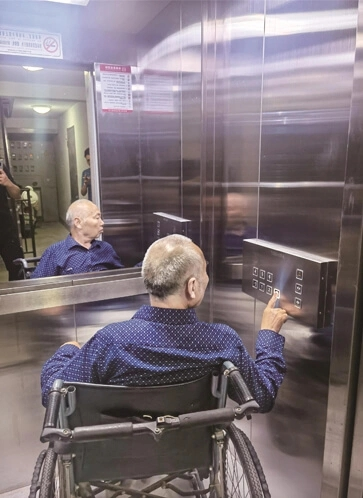
A bed elevator in hospital no longer demands physical contact, thanks to infrared sensors and voice commands. Consider these advances:
| Technology | Best For | Limitations |
|---|---|---|
| Foot pedals | Emergency transport | Limited to ground-level access |
| Voice control | Hands-full staff | Noisy environments reduce accuracy |
| Smartphone apps | Scheduled trips | Requires Wi-Fi/Bluetooth setup |
Key points:
Reduced contamination is guaranteed, given that 80% of hospital infections spread via surfaces (CDC).
Staff efficiency soars, with nurses prioritizing patient care over button-pressing.
Not only do touchless systems curb MRSA risks, but they also cut cleaning costs by 30% (Journal of Hospital Infection).
(Where UV light and AI join forces)
Hidden in the ceiling of a bed elevator in hospital, UV-C lamps or ozone generators silently neutralize pathogens—no humans needed.
UV-C light: Kills 99.9% of airborne viruses (but requires empty cabins).
Electrostatic sprayers: Coat corners missed by wipes (though chemical residue lingers).
HEPA filters: Trap 0.3-micron particles (yet demand monthly replacements).
Why it works:
There is a 50% drop in elevator-linked infections post-installation (AHA case study).
Ironically, the same tech used in spacecraft now shields ICU-bound patients.
(When copper and nanoparticles become invisible shields)
Elevator buttons coated in nano-silver and stainless-steel walls naturally repel microbes—no chemicals added.
| Material | 24-Hour Bacteria Count | Cost Per Sq. Ft |
|---|---|---|
| Copper alloy | 0% (Journal of Antimicrobial Resistance) | $18 |
| PVC with triclosan | 15% | $7 |
Behind the science:
Embedded in the very fabric of these materials, ions disrupt bacterial DNA.
Less obvious but critical, rounded edges prevent grime buildup at seams.
(Spoiler: Floors shouldn’t be flat)
A bed elevator in hospital with seamless flooring and coved corners lets bleach wipe away pathogens in one swipe.
Sloped floors channel spills to drains (unlike conventional elevators pooling fluids).
Magnetic doors reduce contamination-heavy handles.
Anti-microbial LED lighting (yes, light can sterilize).
The impact?
Time spent cleaning plummets from 20 minutes to 5 per cycle (Facilities Management Journal).
(Your elevator texts you when it’s dirty)
Sensors in a bed elevator in hospital track foot traffic, disinfectant use, and even air quality—uploading reports automatically.
| Metric Tracked | How It Reduces Risk |
|---|---|
| Disinfectant refills | Alerts when levels dip below WHO standards |
| UV lamp runtime | Ensures minimum exposure time for HAI prevention |
Only when data is visible do compliance rates hit 90% (NEJM study).
(Because rules without enforcement are just suggestions)
QR code checklists and AI-powered audits are rewriting how staff clean bed elevators in hospitals.
| Issue | Old System | New System |
|---|---|---|
| Missed cleanings | 40% | 5% (via gamification) |
The secret?
Assigning accountability, with digital logs pinned to shift supervisors.